The time is right: Organizing against the surveillance-industrial complex in the ATmosphere and the fediverses
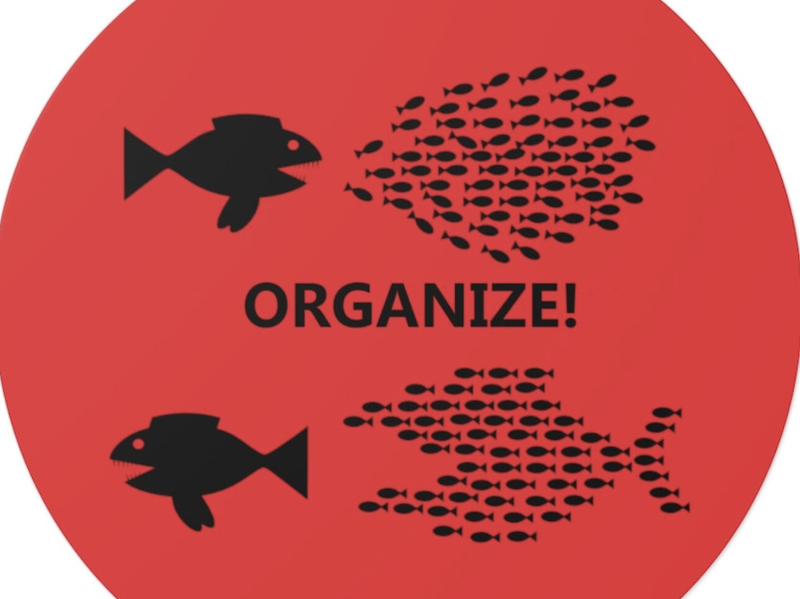
If we organize, we can have a big impact in the fight against the surveillance-industrial complex.

"The use cases for alternative social networks – not controlled by techbro white supremacist CEO's working with their cronies in authoritarian governments – practically write themselves in today's world. And with so many talented social scientists, designers, systems thinkers, and developers directly impacted by DOGE, MAGA, et al, there are a lot of people with the right skills for these new networks to make rapid progress."
– If not now, when? Mutual aid and organizing in the fediverses, the ATmosphere, and whatever comes next, March 2025
If we organize, the ATmosphere and the fediverses can have a big impact in the linked fights against different aspects of the surveillance-industrial complex. The density of people here who care about these issues is high, and we've got some very useful community-controlled infrastructure, innovative technology, and a developer ecosystem that understands the value of providing tools for organizers and communities.
And the time really is right. Every long-term privacy and digital rights organizer I've talked to agrees that there's never been more awareness of the threats of the surveillance-industrial complex, including US-based Big Tech and the fascist US government. The way that massive corporations that manufacture, distribute and profit from surveillance technologies work with government agencies like ICE, CBP, DHS, and their allies in law enforcement – and their equivalents in other authoritarian and genocidal countries – highlight both the harms and risks of the pervasive surveillance and the urgency of doing something about it.
Here in the US, as Solidarity over Surveillance says,
"Communities across the country are pushing back. Local groups are joining together to ban license-plate-reader companies like Flock from their towns. States are passing laws to prevent the federal government and law enforcement from buying our data from private parties. And activists are educating their communities on how to protect themselves from rampant surveillance.
The time is now to rein in the surveillance state."
In followon posts I'll go into more detail of how can have an immediate impact on these issues and related ones like resisting AI data centers. (Update, August 5: see “The S is for surveillance”: fighting KOSA and bad internet bills in the ATmosphere and the fediverses for the first of these follow-on posts.). And there are similar opportunities everywhere! This post stays at a higher level, looking at why I think the the time is also right in the ATmosphere and the fediverses.
I've been experimenting with organizing on decentralized social networks for almost a decade, and over the last year, it really feels like we've hit a tipping point – at least here in the US, and I suspect the same is true in Canada, the UK, several European countries, and probably elsewhere. Why?
- There are enough people and organizations already active here – organizers. journalists, independent and mainstream media, tech justice experts and advocates, civil society organizations, politicians, candidates, etc etc etc – for some tactics to be very effective complements to in-person organizing – and counter the pro-surveillance bias of mainstream media.
- Decentralized social networks are much friendlier ground for organizing then the hostile territory of Big Tech social networks. Some have values actively rooted in resistance: Blacksky is rooted in mutual aid and radical Black organizing traditions; the Free Fediverse is defined in opposition to surveillance capitalism, and fought off Meta's attempts to annex the ActivityPub Fediverse. The fediverses' focus on consent flies in the face of surveillance capitalism's norms. Even in more contested terrain like Mastodon, Bluesky, and the corporate fediverse, most people generally oppose Big Tech and the surveillance state – and are eager to take action.
- The emergence of international ATmospheric communities like Blacksky, Northsky and Gander in Canada, and Eurosky in the EU complements the fediverses' global reach and EU-centricity – and community-focused projects like Blacksky's Acorn, Bonfire, and Newmast are built by teams with a focus on organizing and mutual aid.
- The technology continues to improve, with increasing numbers of useful tools for organizers and for people who want to get involved in activism. Custom feeds like Flock and other ALPRs and KOSA/Bad Internet Bills (accessible from any ATmosphere account including Blacksky, Eurosky, Northsky etc), and fediverse equivalents like the KOSA and other Bad Internet Bills Lemmy community and Newmast's Age Verification Channel (both accessible from any GoToSocial, Bonfire, Mastodon, etc accont) let people follow an issue and find out about key actions. Knowledge networks like Bee's Age Verification and ID Checks Semble collection are a great asset for people who want to dig into a topic more deeply. Germ Networks and Solidarity.Social link ATmosphere accounts to end-to-end-encrypted private messages and group chat, complementing Signal (where organizers are overwhelmed by notifications). These tools aren't available on centralized social networks, so for once we have a technology advantage.
"Our research found a transition to a pluriverse of options could be the most viable way forward: this might include repurposing existing platforms, embracing low-tech approaches, and developing innovative alternatives that meet the needs of social justice organizations and marginalized communities."
– Engine Room's report on Exploring a transition to alternative social media platforms for social justice organizations in the Majority World
Big Tech's much larger centralized social networks aren't going away an time soon. Despite all their censorship, demands for ID, moderation issues, tracking, exploitation etc etc etc) Instagram, TikTok, YouTube, etc, remain useful for mobilizing, getting the word out, and recruiting.
Still, it's not like our reach is limited by the current size of decentralized social networks. Most of also communicate via email and/or group chat and/or Signal and/or Big Tech social networks – and know people in real life too. So we have lots of ways of building on the organizing we do in the ATmosphere and fediverses.
"Surveillance isn't inevitable."
– National Week of Action against ALPRs, noalprs.com
There's really a lot of potential upside here. Grassroots activism on social networks has made a huge difference in the past – Un millón de voces contra las FARC, Get FISA Right, Join the Impact, #BlackLivesMatter, #metoo – and it can be even more powerful on platforms that we control.
And a lot of people who currently aren't active on decentralized social networks are also pushing back against Big Tech, age verification, AI data centers, and mass surveillance. So if we become a great place to organize against surveillance capitalism and the surveillance-industrial complex (and build tools that are useful for all kinds of organizers), we'll attract a lot of people, and accelerate movement away from Big Tech's centralized social networks.
Win/win!
If that sounds interesting to you ...
- Get involved! Links here are starting points on some of these, but there's lots of other important stuff going on as well all over the world. So look around for others interested in the same issues as you and start connecting. And as you do, think about what could make the process more effective.
- Please discuss! The ideas here are really just a starting point – see below for some discussion questions, but anything relevant is welcome!
- The Polis conversation here is the easiest way to share your thoughts and give feedback on what others are saying.
- In the ATmosphere, the thread on blacksky.community is also accessible via mu.social, Bluesky, and other apps; the discussion on atmosphere.community focuses on the tools and technologies.
- In the fediverses, the thread on gotosocial.thenexus.today is also accessible from most other fediverse platforms
- Stay tuned for more! Follow @nexusofprivacy.net, @nexusofprivacy@gotosocial.thenexus.today, @thenexusofprivacy@lemmy.blahaj.zone and/or subscribe to the Nexus of Privacy newsletter
Update, August 5: Continued in “The S is for surveillance”: fighting KOSA and bad internet bills in the ATmosphere and the fediverses